Wednesday, May 4, 2011

The Montreal Screwjob

On November 9, 1997, the World Wrestling Federation (WWF) produced a pay-per-view extravaganza featuring a main event in which one of the wrestlers defeated his opponent by using a “finishing maneuver” more commonly associated with a different wrestler.  For some reason, the wrestler who lost the match (and his fans) responded by getting really, really upset.

Putting things in context
Everybody knows that professional wrestling, generally speaking, is fake. Ah, but “generally speaking” is not the same as “always.”

Surely the most notorious instance of pro wrestling “breaking script” transpired during the main event of the 11th annual WWF Survivor Series — better known as the “Montreal Screwjob” — in which then-WWF Champion Bret “The Hit Man” Hart, put his title on the line against arch-rival, Shawn “Heartbreak Kid” Michaels, before a sold-out Molson Centre in Hart’s home country of Canada.

Michaels applies the Sharpshooter
As is typical in pro wrestling, a basic script for how the match would unfold had been agreed upon ahead of time by Hart, Michaels, and WWF owner Vince McMahon. Hart, who had recently signed a contract with the WWF’s principal rival, WCW — set to take effect one month after the Survivor Series — recognized that he would need to “lose” the WWF championship prior to leaving the company, but he and McMahon disagreed on the specifics of how this storyline should be written.

McMahon wanted Hart to "job" (i.e., lose cleanly) to Michaels in Montreal, but Hart refused: partly because he didn't want to lose the title in Canada, where he was considered a sort of national hero; but also because he and Michaels had significant bad blood towards each other — not just "on camera," but in real life.  As a result, Hart, Michaels, and McMahon mutually decided that the match would end in a disqualification — meaning that the title would not change hands — and that Hart would then willingly abdicate the title to McMahon the following evening on Monday Night Raw.

The specifics of the match script hinged on a scenario in which Michaels, late in the match, would lock Hart into the Sharpshooter — The Hit Man’s own signature submission hold — which promised to “draw heat” from the fiercely pro-Hart, Canadian audience. But then, after a few tense moments in this predicament, the agreement was that Hart would escape from the hold; and that, soon thereafter, three of Hart’s allies (his brother, Owen Hart; “The British Bulldog” Davey Boy Smith; and Jim “The Anvil” Neidhart”) and two of Michaels’ allies (Triple H and Chyna) would collectively interfere in the match, eventually resulting in a double disqualification.

This, at least, was the plan.

But in a shocking, real-life twist, McMahon and Michaels (along with other WWF higher-ups) met the day prior to the event and together crafted a secret plot to double-cross The Hit Man. As a result, what actually came to pass was that, when Michaels applied the Sharpshooter, referee Earl Hebner almost immediately waved his hand to declare the match over and Michaels the victor, even though Bret Hart had very clearly not submitted. In the video (embedded below), you can actually hear McMahon — who was standing immediately ringside — order the timekeeper to “ring the bell!” You can also see a genuinely astonished Bret Hart spit directly into McMahon’s face.


After spitting on McMahon, Hart would go on to destroy much of the WWF's ringside broadcast equipment. Hart's supporters were also livid, including many of the other wrestlers, some of whom threatened to leave the company as a direct result of McMahon's betrayal (at least one, "Ravishing" Rick Rude, did leave).  Another high-profile wrestler, Mark Calaway (aka "The Undertaker"), confronted McMahon after the event and demanded that he publicly apologize to Hart. Later that evening, when approached by McMahon backstage, Hart delivered a single punch to McMahon's face, knocking him to the ground and leaving him with a black eye.

Many fans in the audience were equally incensed; some threw garbage at McMahon, and others pushed Michaels, as they retreated to the locker room.  To this day, many wrestling fans around the globe have still not forgiven them.

But despite all the backlash, McMahon's plan had succeeded, and the damage was irreversibly done. As if deceiving Hart into losing his final match to his bitterest rival in front of his own countrymen wasn’t humiliating enough, the cruel and ironic culmination of McMahon and Michael’s scheme — which portrayed Hart as having submitted at the hands of his very own "trademark" maneuver — ensured that the ultimate insult would be added to injury.

If you're interested in learning more about the Montreal Screwjob, I'd recommend a documentary called Hitman Hart: Wrestling with Shadows, now available on Netflix Watch Instantly.

Saturday, February 6, 2010

Do Re Mi Fa Oh Si Di

It's no secret (one need look no further than here) that there's a certain obsessive pathology running through the veins—and synapsing through the brains—of brumpelstiltskin.  With that in mind, it's finally time for me, MC Gallagher, to unveil the fruit of my most compulsive musical labors.  Here goes...


Several years ago, circa 2005, I devised an algorithm for rating my favorite albums.  The crux of the formula involves rating each song from 1 to 5 stars (1, 2, 3, 3½, 4, 4½ or 5).  This is quite subjective, but I've become reasonably clear on what each rating signifies.  For example, a 3-star song is one that I "like", but am sometimes just not in the mood for (e.g., if I heard it on the radio, I might switch the station).  Five-star ratings, by contrast, are reserved for songs that do what music at its best is meant to do: induce a reaction that is profoundly emotional and/or physiological in nature (e.g., tears of sadness, chills of nostalgia, lulls of tranquility, invigorating bursts of adrenaline, etc). 

But my condition—which psychiatrists on the DSM-V planning committee are referring to as "Do-Re-Mi-Fa-O-C-D"—does not allow me to stop there. Oh no! Rather, after rating each song on a given album, I am then compelled to weigh songs based on length (i.e., a 10-minute song contributes more to the final rating than a 60-second song), and from there compute an overall average score.  Finally, I adjust the average-of-songs score to account for the aesthetic cohesiveness of the album as a whole (e.g., a really cohesive concept album gets bonus points; an album that's uneven, or drags on a bit too long, gets docked a few points).

That's the gist; here's the list
Was it right and salutary to inflict science and statistics upon one of the most intrinsic and qualitative things in my life?  I'm not sure.  But once I started, I just couldn't stop.  And now, after months and months (OK, years) of just thinking and talking about it, I'm finally ready to reveal my magnum opus: "MC Gallagher's 100 Favourite Albums"!

But first, just a few clarifications/disclaimers: (1) I only considered proper studio albums and live albums; thus, "compilations" that otherwise might have made the list (like Hatful of Hollow by The Smiths) were not eligible; (2) I've long been accused of Anglophilia, and the results have certainly borne that out, so brace yourself for a hearty dose of British music—literate and witty, rousing and swaggering, melancholy and brooding British music!; and (3) to merely say that the difference between my top 2 albums (i.e., 21 ten-thousandths of a point) does not reach statistical significance would be a bit of an understatement; in the end, the album that prevailed is the one that’s dearer to my heart, and which I discovered first, when a then-13-year-old still stood at the threshold of his musical awakening, and the band in question still teetered on the precipice of utter ubiquity, about to “supernova” into greatness.

To view the list, click below on the "Continue Reading" link.

Thursday, September 10, 2009

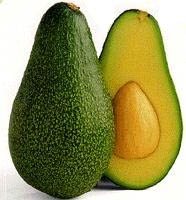
Jacquamole!

As someone whose burger-buying decision-making tends be negatively influenced by TV ads perpetuating the stereotype that men don't know how to cook (let alone open a bag of cereal)—not to mention those that objectify women in perhaps the most unsubtle way imaginable—it's probably no surprise that I'm not a big fan of Hardee's commercials.

That said, I must admit to being at least mildly impressed by a recent ad for their French Dip Thickburger. Granted, it's not the ad itself that impresses me, but rather that Hardee's chose to hitch this particular ad campaign to the slogan: "It's better when it's French". To do so a mere six years after a significant percentage of the US population seemed to consider ordering "French Fries" (instead of "Freedom Fries") tantamount to a minor act of treason has to be considered a bit of gamble on Hardee's part, and I can't help but tip my beret to such a display of guts.

It is better when it's French
The inspiration for beginning this article in such a roundabout manner stems from a recent food-related conversation I had with one of brumpelstiltskin's closest aides (alias: Axe), who asked me: "Do you really want to take guacamole lessons from a Frenchman?"

Of course, the Frenchman in question is none other than my culinary hero, Jacques Pépin. To respond to Axe's question, my answer is a simple yet emphatic "Oui!" In other words, you do want to learn the art of guacamole—or, as I like to call it, "Jacquamole"—from Monsieur Pépin. The simple recipe (found in his book "Fast Food My Way") is as follows:
Mix 2 ripe avocados (crushed coarsely with a fork), ½ cup diced tomatoes (including seeds/juice), 1/4 cup finely chopped onions (put in a colander and rinsed under cold water), 1½ teaspoons finely chopped garlic, 3 tablespoons minced scallion (i.e., green onions), 1/4 cup chopped fresh cilantro, 1½ tablespoons extra-virgin olive oil, 1 tablespoon lemon juice, and ¾ teaspoon salt. Finally, if you like a little spice, add 2 tablespoons minced chile pepper and ½ teaspoon Tabasco Green Pepper sauce.
Toss this in a bowl, add some tortilla chips, and enjoy!

Monday, August 31, 2009

A Champagne Supernova of Tears

I know, I know, brumpelstilskin is just incorrigible: to cite an article about Oasis as our all-time least readership-pleasing blog post only to turn around and publish a new article about Oasis a mere five days later—what nerve, what incoherence, what hooliganism!

I read the news today (oh Noel!)
But how could I have foreseen the (inglorious) story that would await me on Saturday morning? That's when a text from a friend (code name: Erik the Red) alerted brumpelstiltskin to the following statement issued Friday night by Oasis’ lead guitarist and chief songwriter, Noel Gallagher:
It's with some sadness and great relief to tell you that I quit Oasis tonight. People will write and say what they like, but I simply could not go on working with Liam a day longer.
By Liam, Noel was of course referring to his younger brother and Oasis' lead singer (pictured above, left, in happier times). Apparently, Britpop's favorite sibling rivals had another of their famous bro-hahas Friday evening (prior to a concert in Paris), only this latest row appears to have been a bit more serious than usual—rumor even has it that Liam smashed Noel's favorite guitar! (In case you’re wondering, the “lads” are aged 42 and 37, respectively.) Granted, Noel’s “left” the band many times before—and I wouldn’t be surprised if the brothers decide to patch things up and reunite—but the fact that he posted his decision to the band’s official website does lend it a certain air of finality that his previous announcements lacked.

It's better to burn out...
If this really is the end, it comes at a pretty good time, I think. For instance, whereas five years ago the band seemed to be descending rapidly along a path of ever-increasing irrelevance, I would argue that their last two records (released in 2005 and 2008) have marked a rather improbable (and relatively triumphant) return to respectability. In fact, their last single—the lyrically despairing but musically pulsating “Falling Down”, released in March–is perhaps my favorite Oasis song in over 10 years.

But another reason why now seems like an okay time to call it quits has already been mentioned; namely, Noel and Liam are 42 and 37, and thus fast approaching Rolling Stones territory. At age 66, Mick Jagger is still singing "Satisfaction"; twenty-five years from now, will Oasis fans really want two 60-year-old Gallagher brothers still up onstage singing "Live Forever" and calling each other wankers?

Wednesday, August 26, 2009

The World's Best, Litterally

Brumpelstiltskin has a rather deplorable habit of crafting blog posts that only appeal to a small percentage (and in some cases none) of the Mic’s Tape readership. For many readers, today’s article is but the latest example of this heinous trend. But for those of you who are (a) cat owners and (b) not 100% satisfied with your current brand of cat litter, well, this is your lucky day.

With that ridiculous introduction out the way, let me cut to the chase. Back in October I issued a glowing endorsement of a product called World’s Best Cat Litter (WBCL). Ten months later, my satisfaction (and that of my cats, Dickens and Dolly) remains complete. For starters, I continue to marvel at its combination of top-notch "clumpability" and odor control; all-natural corn kernel-based ingredients; and biodegradable, septic-safe composition (which allows it to be flushed rather than taken out with the trash).

But what impresses me most is its cost-effectiveness. For instance, since May 1 of this year, I've spent $37.10 on three 8-lb bags and one 18.7-lb box of WBCL (yes, I've been tracking this with Quicken), which amounts to less than $10 per month over the past four months (note: I have two litter boxes, which I scoop at least once a day). To recycle some statistics from my original post, compare this to the last brand I bought, "Better Valu", which was seemingly cheaper at $2.63 for a 10-lb bag, but utterly reeked (and needed to be thrown away) after just a week—and thus would've amounted to more than $10 per month had I stuck with it.

All that said, my real inspiration for revisiting WCBL is that the company recently launched a new logo (pictured), new packaging and product names, a Facebook page and Twitter feed, and a fully revamped website that features a wealth of information—including several videos. In conjunction with this launch, WBCL has given its blog supporters (like Mic's Tape) the opportunity to share an exclusive coupon with their readers. If you'd like to try WBCL, click here to download a coupon for $4.00 off your next purchase. Please note that the coupon must be downloaded by August 29 (i.e., Saturday), but does not expire until September 30.

Sunday, August 23, 2009

Iowa Town Hall Tamer Than in (Kiss My) Massachusetts

I attended a health care "Town Hall" meeting yesterday morning on the University of Iowa campus in Iowa City, led by local US Congressman Dave Loebsack (D-IA). In fact, you may have spotted me afterward holding the door for Mr Loebsack as we exited MacBride Hall (where the event took place) and stepped out into the beautiful Pentacrest section of campus. (Sure, we didn't talk, but it was still the closest I've come to rubbing shoulders with a "major" politician since shaking hands with the now-disgraced John Edwards in 2004.)

While leaving the meeting, I overheard an older gentleman remark that the forum was "more raucous" than he expected. In contrast, I found the atmosphere to be considerably more civil than I anticipated—an impression undoubtedly colored by footage I'd seen from a similar Town Hall held last Tuesday in brumepelstiltskin's home state of Massachusetts (led by US Rep Barney Frank, D-MA). Take a look at the video:


Besides this Daily Show segment (and a similar YouTube clip), I also caught about 30 min of unedited coverage replayed the other night on C-SPAN. (That's right, I was watching C-SPAN for fun. Do you wanna fight about it?) What struck me most about the MA Town Hall were that the audience's questions (at least the ones that I saw) almost invariably revealed skepticism, fear, and/or opposition to health care reform; and also the frequency with which audience members booed or otherwise interrupted Mr Frank while he attempted to respond to said questions.

In comparison, the atmosphere yesterday in Iowa City was less charged, presumably in part because the local community is predominantly sympathetic to health care reform. That said, there were certainly some fireworks in MacBride Hall, mostly in the form of audience members of different persuasions yelling at each other during questions. But while there were plenty of derisive hoots—and at least one rather spirited cry of "Socialism!"—I didn't spot any pictures of Barack (or should I say Adolph?) Obama sporting a Hitler mustache, and Mr Loebsack was for the most part given polite deference when speaking.

In regard to the meeting's actual content, I felt that Mr Loebsack's tone fostered a positive dialogue, and that his responses effectively addressed many of the misleading/false claims circulating about issues like euthanasia (the bill would neither set up "death panels", nor mandate end-of-life counseling sessions for seniors); a "government takeover" of health care (a public option would not replace private insurance); health care "rationing" (he cited an American Medical Association statement that "the bill would not ration care"); and the bill's potential effects on small businesses (an amendment proposed by conservative "Blue Dog" Democrats would exempt companies with payrolls below $500K from paying for government-sponsored health care).

To be critical, there were instances in which Loebsack's responses could have been more transparent, including his reply to the first audience question, which asked whether reform would entail government funding of abortion services. Loebsack's reply (that nothing in the bill would "mandate" coverage for abortion) echoes similar comments by President Obama, but according to the non-partisan website Factcheck.org (article here), Loebsack's and Obama's statements only convey a sort of partial truth:
The truth is that bills now before Congress don’t require federal money to be used for supporting abortion coverage. So the president [and Loebsack are] right to that limited extent. But it’s equally true that House and Senate legislation would allow a new "public" insurance plan to cover abortions, despite language added to the House bill that technically forbids using public funds to pay for them.
Loebsack also lacked detail when replying to concerns about how reform would be paid for (to paraphrase, he basically said that a public option would initially be paid for by taxpayers, but eventually by individual premiums—similar to private health care plans). Out of all the opposition I've heard voiced about reform, it's the concerns about how to pay for it that strike me as by far the most compelling. To help restore lagging public support for reform, the President and Congress would be wise to better target unease about the price tag.

Lastly, dear readers, if you have anything to say about the issue, please share your thoughts!

Wednesday, August 19, 2009

I Got Technotrashed

Sure, the transactions that inspired this blog post were paid for using a Visa (not a MasterCard), but still:
Paying a company to responsibly recycle a 29 lb box of electronic waste: pricey

Paying the US Postal Service to ship said box to said company: pricier

Finding out that said box was lost in transit: priceless!
Sometimes you take out the technotrash, sometimes it takes you out
The company I refer to is GreenDisk, a WA-based e-waste recycler. As mentioned in a previous post, I'd long been meaning to send them some unwanted electronic materials (aka "technotrash"), and last month I finally did it. Into a big box I tossed a pile of old videotapes from my mom; some obsolete audio cassettes from my friend Paul; plus my own accumulation of CD-Rs, cords, jacks, a modem, and more. In the end, the box weighed in at 29 lbs, which GreenDisk charged $9.65 to process and the USPS charged $13.30 to ship (via media mail). As I left the Post Office with a smug look on my face, I thought I'd really done my part to close the e-waste loop. In reality, I was about to get Technotrashed.

Last Friday, I received a letter from the USPS Des Moines Bulk Mail Center notifying me that an "empty wrapper with [my] address on it was found in the mail and it is believed to have been separated from a parcel during handling". After re-reading the letter a few times (and looking up "parcel" in the dictionary), I realized that by "empty wrapper" they meant my box and by "parcel" they meant my 29 lbs of e-waste.

Five days (and many tears) later, I'm still trying to figure out where it all went wrong. Did the box fall off the mail truck en route to Des Moines, and are its former contents now scattered alongside Interstate 80? Did the postal worker who processed my shipment realize that it contained several episodes of Dr Quinn on VHS, and decide to "sully" his employer's reputation and make off with the whole caboodle?

I might never know. But one thing I do know is that if those 29 lbs of e-waste end up in the landfill—which now seems likely—they will not do so in vain. No, because even if nothing else that's good ever results from this recyclatragedy, at least it gave brumpelstiltskin the inspiration to blog again.